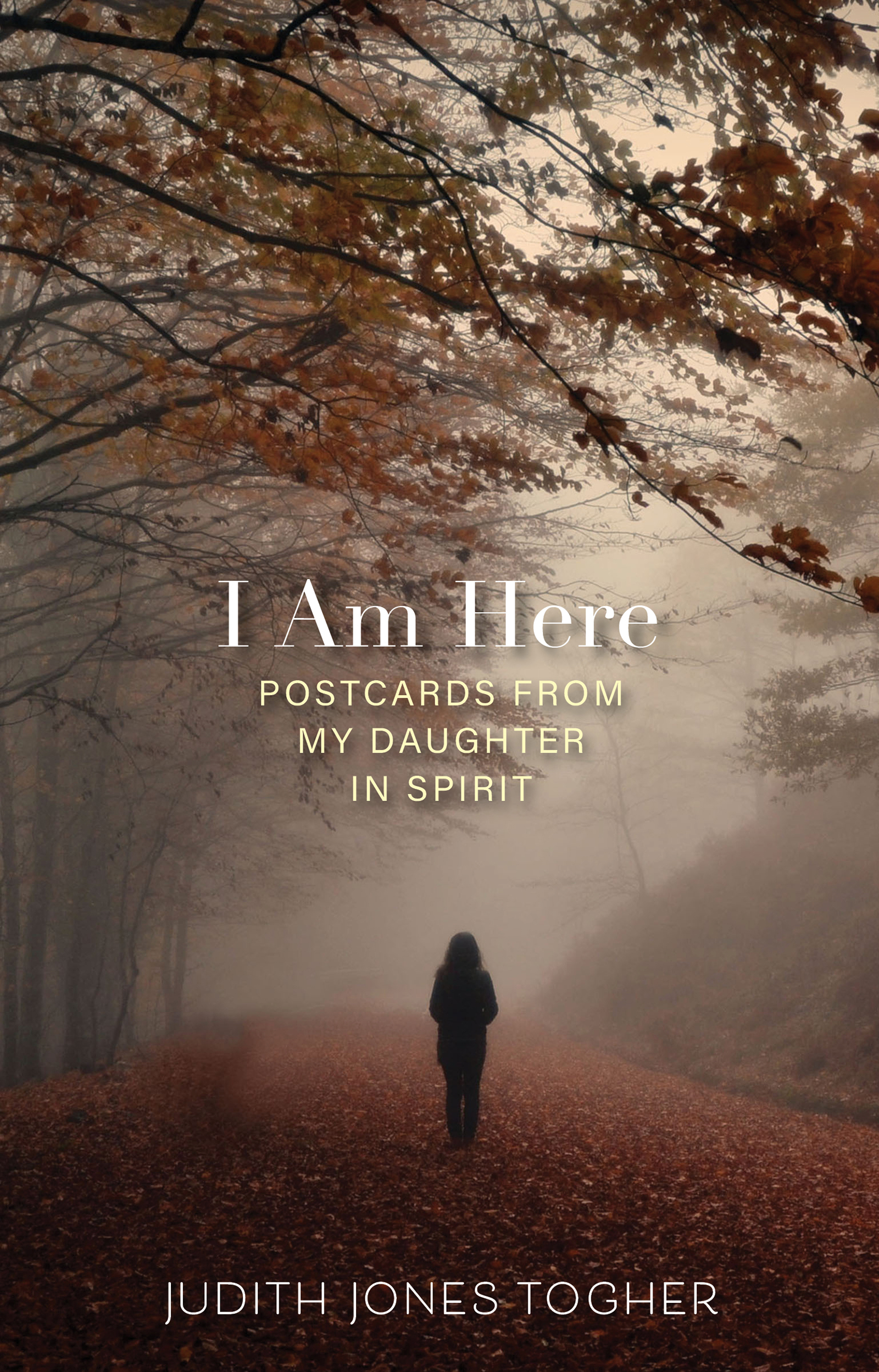
When Judith Jones Togher’s thirty-nine-year-old daughter, Suzanne, died after years of illness, trauma, and bipolar disorder, the loss shattered her. Mother and daughter had made a pact: If one of us dies first, we’ll never really leave the other. In the first raw months of grief, that promise felt broken—until small, impossible things began to happen. A clock leaping from a shelf. The scent of roses in an empty room. A penny appearing exactly where Judith’s gaze fell. Each arrived with the same unmistakable feeling: I am here. This is a grief memoir that shows you how to recognize and trust your own signs from the other side.
Judith’s story is both a love letter and a map. In I Am Here: Postcards from My Daughter in Spirit, she shares the story of a continuing relationship with a complicated, beloved daughter, and offers companionship for anyone learning to live after loss. She traces Suzanne’s path from sensitive, precocious child and gifted artist to young woman navigating addiction, PTSD, and a rare lung disease, and finally to the New York ICU where, in a medically induced coma, Suzanne later recalls being told by a “committee” that she must return: her work isn’t finished yet.
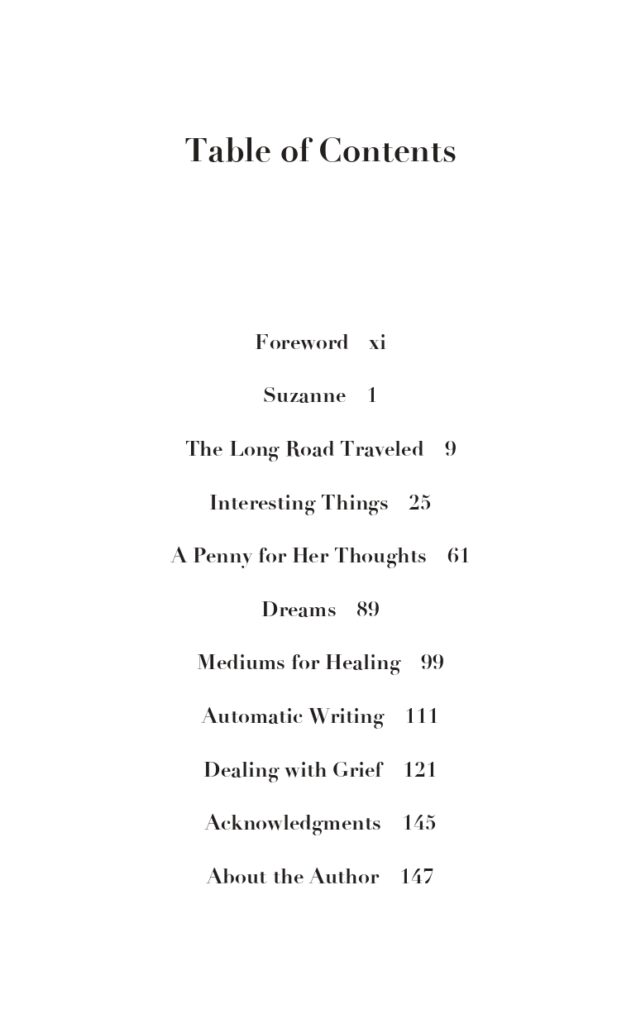
What follows is Judith’s long walk through grief and the quiet ways Suzanne seems to walk with her: pictures that tilt and fall, clocks that refuse to keep time, songs that start at the exact right lyric, vivid dreams, and pennies turning up in wildly unlikely places—from Central Park bridle paths to remote trails in Colorado, from Amalfi and Normandy to a hotel bed in Saigon. She comes to call these moments “postcards,” brief but unmistakable messages that bridge the veil between worlds. Grief rewrote her life; the postcards rewrote her grief.
Along the way, Judith weaves in the practices that helped her survive: yoga and breathwork, meditation, journaling, grief support groups, reputable mediums, automatic writing, tending plants, caring for animals, and learning to mark birthdays and death-days with ritual instead of dread. She writes about “thin places” where the distance between here and the hereafter feels narrow, and about how to notice, honor, and record the small signs that arrive when our hearts are broken open.
For anyone who has lost a child, a partner, a parent, or a dear friend and quietly wonders if their bond can continue, I Am Here offers companionship more than answers. It invites you to notice your own “postcards”—those sudden scents, songs, dreams, and symbols that land with uncanny precision—and to trust that love is not ended by death, only translated.