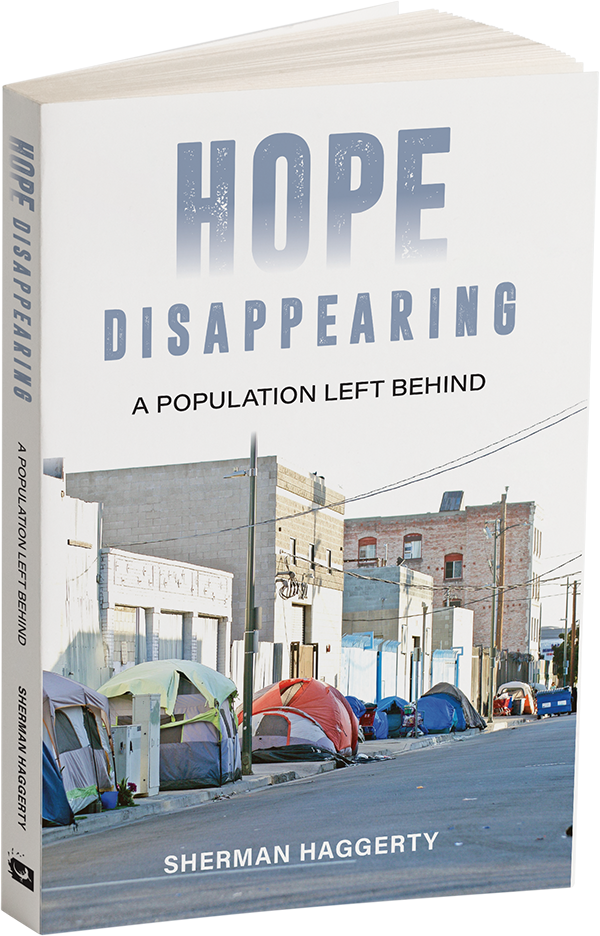
On any given night in America, hundreds of thousands of people sleep in shelters, cars, and on sidewalks. We’re told the answer is simple: give them a key and the crisis will fade. For the people working closest to the streets, the reality looks very different.
Hope Disappearing takes readers inside Mather Community Campus, an award-winning transitional housing and employment program in Northern California that, between 1997 and 2019, served thousands of homeless people through its employment-based campus. Many left homelessness for good. With recidivism under five percent and graduates becoming tax-paying workers, parents, and neighbors, Mather quietly proved that with the right mix of structure, treatment, training, and time, even the “hardest cases” could rebuild their lives.
Then federal policy changed.
Former homebuilding executive turned Volunteers of America minister and program director Sherman Haggerty tells the inside story of how a national shift toward a one-size-fits-all Housing First funding model starved programs like Mather of support. As dollars were steered toward counting units instead of measuring recovery, the 24-year campus was converted into a bare-bones shelter, and an approach that had been working for people with deep trauma, addiction, and mental-health challenges was dismantled in the name of progress.
Through the searing redemption story of “Jack” and other students, Haggerty shows what happens when people who have cycled through shelters, jails, and encampments are finally offered more than a bed: sobriety support, counseling, job training, accountability, community, and hope. He contrasts these hard-won successes with the unintended consequences of a system that moves people into rooms quickly but often leaves the underlying wounds untouched.
Combining frontline storytelling with clear, accessible policy analysis, Hope Disappearing explains how a generation of proven programs was pushed aside—and what a better both-and model could look like: one that keeps rapid housing as a tool but restores treatment-rich, work-focused communities for those who need more than a key.
If you’ve ever wondered why the tents keep multiplying even as the budgets explode, this is the story you’ve been missing. For policymakers, faith and nonprofit leaders, and anyone who refuses to accept sidewalk encampments as inevitable, Hope Disappearing is a bracing, compassionate call to rebuild a system that remembers the people our current policies leave behind.