
“What are the best-selling genres of 2026?” is really two questions: what’s selling right now, and what’s most likely to keep selling by year-end.
This edition takes a data-backed forecast approach. We use the latest full-year market baseline (2025) and the demand patterns that reliably carry forward into 2026: repeat-reading genres, identity-driven nonfiction, and categories that travel well across print, ebook, and audio.
Fast answer (2026 forecast): The genres most likely to dominate 2026 sales are romance (including romantasy), suspense/thrillers, graphic novels & manga, children’s series and comics, and evergreen nonfiction leaders like religion/inspiration and self-help. These categories win because they drive binge behavior, series loyalty, gifting, and multi-format consumption.
How this forecast is built (so it’s useful, not hype)
Publishing is a long-lead-time business. Most authors can’t chase micro-trends without arriving late. So we focus on tailwinds: categories with durable demand and compounding backlist behavior.
Data context comes from Circana BookScan reporting summarized by Publishers Weekly (U.S. print units by category), plus category-level signals from Circana and NielsenIQ BookScan (UK/Ireland), and format tailwinds from the AAP StatShot Annual report.
The 2026 genre forecast (with confidence levels)
Think of this as a decision tool: if you’re choosing a category to write into—or positioning a manuscript that already exists—use the confidence tiers to de-risk your bet.
High-confidence leaders (structural demand is durable)
Romance + romantasy: emotional payoff + series compounding + platform discovery.
Religion/inspiration: gifting + daily-use formats + identity-driven buying.
Self-help/personal development: “buy an outcome” demand + repeat recommendations.
Children’s series + children’s graphic formats: re-reads, series loyalty, and parent/educator buying loops.
Graphic novels & manga: collector behavior, fandom ecosystems, and strong re-read value.
Medium-confidence leaders (strong demand, more sensitive to execution)
Suspense/thrillers: steady appetite, but hook/pacing standards are unforgiving.
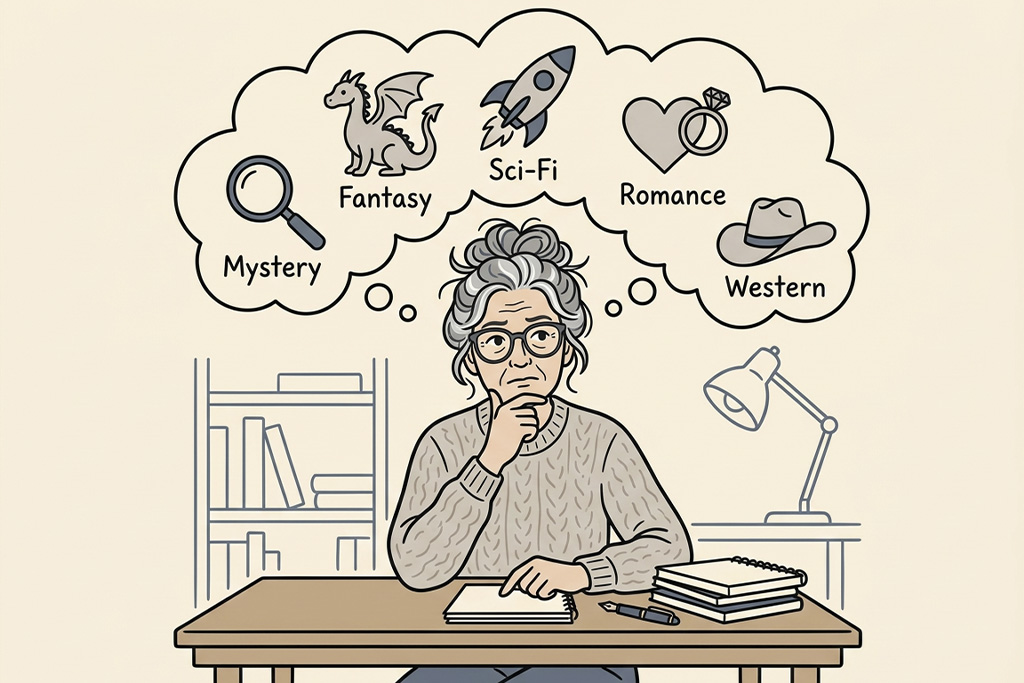
Fantasy & science fiction: durable fandom demand, but packaging and series architecture matter.
Wildcards (can spike fast; plan for durability)
Trend-linked subgenres: niche romance micro-trends, specific fantasy aesthetics, or “one big topic” nonfiction that can surge with cultural moments.
Adaptation-driven surges: backlist revivals when a book-to-screen moment hits.
What’s actually driving best-selling genres in 2026
1) Series behavior beats one-off hype
In 2026, the biggest sales advantage is compounding backlist. Genres that naturally produce series (romance, fantasy, thrillers, kids’ and graphic formats) build momentum title by title.
2) Identity + comfort buying is persistent
Religion/inspiration, certain memoir categories, and self-help win because the purchase is often about who the reader is becoming—or how they want to feel.
3) Multi-format consumption keeps expanding
Audio growth matters because it rewards categories that perform well when listened to: narrative nonfiction, commercial fiction, and clear-framework self-help. The more formats your book can win in, the more resilient your sales become.
2026 winners, explained (and how to position your book inside them)
Romance + romantasy
Why it wins: Romance remains the most efficient “repeat purchase” engine in commercial fiction. Subgenres like romantasy and sports romance have shown strong momentum, and readers reward clear trope signaling.
What’s changing in 2026: tighter trope clarity, sharper branding, and more “series-first” thinking.
How to compete: pick a lane (subgenre + tone + heat level), then build a series promise a reader can binge.
Packaging priority: cover, blurb, and keywords must match reader expectations exactly—romance punishes vagueness.
Religion/inspiration
Why it wins: This category is structurally resilient: it’s bought for daily use, gifting, and community life. It also benefits from repeat reading patterns.
What’s changing in 2026: clearer usability—daily formats, short chapters, navigable structure.
How to compete: treat your table of contents like product architecture. Make it obvious how the book is used.
Self-help / personal development
Why it wins: Readers buy self-help for an outcome. Books that combine a simple framework with real tools travel farther—especially in audio.
What’s changing in 2026: “framework fatigue” is real; readers want practicality, not slogans.
How to compete: build a clear method and show early proof of usefulness in the first chapter.
Graphic novels & manga
Why it wins: Visual storytelling is now a reading behavior, not a niche. It benefits from collector behavior, fandom, and high re-read value.
What’s changing in 2026: readers expect format-native pacing and professional art direction.
How to compete: design the narrative for panels from day one—don’t retrofit a prose manuscript.
Children’s series + children’s graphic formats
Why it wins: Kids’ buying is driven by trust, series recognition, and re-reads. Comics/graphic formats are especially strong because they convert reluctant readers into repeat buyers.
What’s changing in 2026: clearer age-band targeting and more series branding.
How to compete: define the “repeatable emotional experience” (funny, cozy, adventurous, brave) and build around it.
Suspense / thrillers
Why it wins: Thrillers are bingeable and highly recommendable—but the category is ruthless about pacing and payoff.
What’s changing in 2026: stronger hook economics: the first 30 pages must convert.
How to compete: optimize for momentum, clarity, and escalating stakes—then earn your twist.
Fantasy & science fiction
Why it wins: These genres compound through worlds, not just plots. When readers love one book, they buy the series.
What’s changing in 2026: accessibility matters—high-concept worlds still need clean emotional stakes and readable pacing.
How to compete: build a “world promise” and a “character promise,” then deliver consistency across the series.
The Izzard Ink Tailwind Score (pick the right genre without chasing fads)
If you want commercial traction, don’t ask “What’s hot?” Ask “What will still work when my book launches?” Use this five-signal scorecard:
Repeatability: Does the genre naturally support series, re-reads, or daily use?
Multi-format fit: Will it perform in print, ebook, and audio?
Merchandising clarity: Can a stranger understand the promise from the cover and subtitle/blurb?
Channel advantage: Does your genre match your strongest path to readers (Amazon, bookstores, speaking, direct)?
Differentiation with fidelity: Can you be distinctive without breaking the category’s expectations?
A practical decision rule for authors in 2026
If you’re a fiction author, your best bet is usually a series-first plan in a genre with binge behavior. If you’re writing nonfiction, your best bet is a book that functions as an asset: it codifies your method, builds trust, and supports your platform.
Either way, one truth holds: execution beats category. A professionally positioned book in a “smaller” genre can outperform a poorly positioned book in a “hot” genre.
How to publish into a winning genre without looking like a vanity project
Many authors in best-selling categories lose momentum for avoidable reasons: unclear positioning, underpowered editing, or production choices that signal “amateur.” In a crowded market, the book has to look and read like it belongs.
Start with clarity: genre, subgenre, and promise in one sentence.
Invest where readers feel it: developmental editing, line editing, cover design, and interior design.
Choose a rights-safe path: avoid any partner that demands unnecessary control of your IP or makes inflated sales promises.
If you want an objective, low-risk first step, begin with the Manuscript Assessment & Action Plan. It’s designed to tell you what’s working, what’s not, and what to fix first—before you spend heavily on the wrong next move.
When you’re ready for end-to-end support, explore Izzard Ink’s professional book publishing services, and keep the craft side strong with the elite editing checklist.
Frequently Asked Questions
Are these “best-selling genres of 2026” guaranteed?
No. This is a forecast based on durable demand patterns and the latest full-year sales baseline. Your results still depend on execution, positioning, and distribution fit.
Should I switch my manuscript to a hotter genre?
Usually not. Repositioning inside your current genre (clearer promise, stronger packaging, better pacing/structure) is often a higher-ROI move than rewriting into an unfamiliar category.
What’s the fastest way to increase my odds in a best-selling category?
Make your book legible at a glance: cover, subtitle/blurb, and opening chapter should clearly deliver the genre promise. Then invest in editing that elevates the reader experience, not just correctness.