You can publish a children’s book traditionally, independently, or through a guided hybrid path. But before you choose a route, hire an illustrator, or spend money on production, protect both the book and the investment behind it by making sure the manuscript is truly ready for its age band, format, and reader.
At Izzard Ink, the right first step is a Professional Manuscript Assessment: a serious editorial diagnosis that clarifies readiness, age-band fit, illustration timing, and the smartest next step for the book.

A professional children’s book is one of the hardest forms to fake. When it works, it feels effortless. When it doesn’t, no amount of illustration, design, or production can hide it.
Tim McConnehey,
Founder & CEO, Izzard Ink Publishing

Serious authors often ask whether they should self-publish, pursue a traditional publisher, hire an illustrator, or move into editing and production.
Those questions matter, but they are not the first ones.
The better first question is this: Is this manuscript actually ready to become a professional children’s book?
That is where time and money disappear. The idea may be strong. Children may already respond to it. The manuscript may feel close. But until the age band, structure, pacing, and reading experience have been professionally evaluated, the project is still missing the diagnosis that should guide the next decision.
In children’s publishing, the wrong order gets expensive quickly. Authors often begin solving for illustration, printing, or publishing route before anyone has determined whether the manuscript itself is ready for those investments.
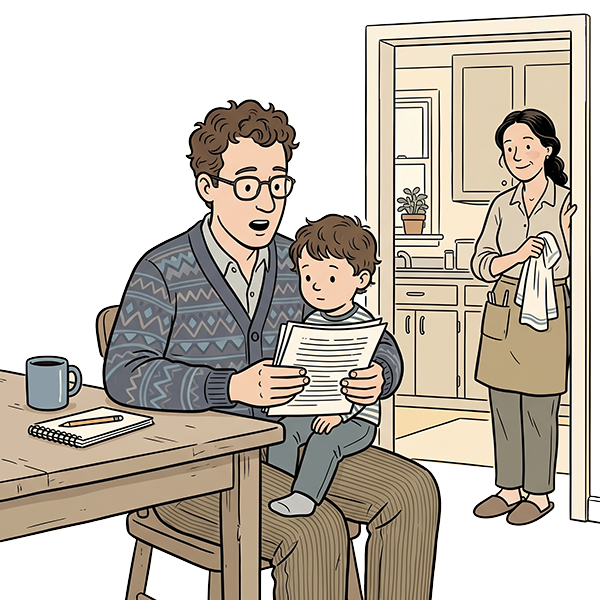
Children’s books create a particular kind of false confidence. The manuscript is short. The language may look simple. The story may already be getting warm reactions at bedtime, in the classroom, or from people close to the author.
That is encouraging, but it is not the same as professional readiness.
Children’s books are one of the easiest categories to misread. A manuscript can feel charming to adults and still miss the child reader. It can carry a worthy lesson and still fail as a story. It can seem ready for illustration while quietly asking the art to compensate for weak structure, thin pacing, or overexplained text.
A children’s book does not become professional because the idea is sweet, meaningful, or easy to imagine visually. It becomes professional when the manuscript is working at the level the category demands.
Most companies answer the question “How do I publish a children’s book?” with a menu of services: illustration, editing, design, production, packages.
That sounds helpful, but it often pushes authors into spending money before the manuscript has earned the next investment.
In children’s publishing, sequencing matters. Once illustration begins, substantial text changes become expensive. Once layout begins, pacing choices harden. Once cover and production work start, the book can look finished before it is ready.
Izzard works in the opposite direction. We do not start with later-stage services. We start by determining whether the manuscript is ready enough to justify them.
That is why the right first move is usually a Professional Manuscript Assessment. It tells you whether the manuscript is ready, what kind of editorial work it actually needs, whether illustration should begin yet, and which publishing path makes sense after that.

Children’s books do not succeed for the same reasons adult books do.
A good concept is not enough.
A meaningful lesson is not enough.
Even beautiful art is not enough if the underlying book is not working.
Here are five things that usually determine whether a children’s manuscript is actually ready.
A professional children’s book knows exactly what shelf it belongs on.
Picture book, early reader, illustrated story, chapter book — each one asks for different sentence control, emotional complexity, pacing, visual load, and reader expectations.
A picture book is not just a short children’s story. An early reader is not just a picture book with fewer words.
Common failure signal: the manuscript sits awkwardly between categories. It reads too old for a picture book, too thin for a chapter book, or too adult in language, structure, and emotional framing.
In children’s books, especially picture books, the text should not do all the work.
The strongest manuscripts know what the words must carry and what the illustrations should carry. They leave room for the art to add narrative value instead of repeating what the text already says.
In a strong picture book, part of the storytelling lives in the gap between the line and the spread.
Common failure signal: the manuscript narrates what the child can already see, overexplains the action on the page, or leaves the illustrator no real room to create surprise, humor, or emotional contrast.
Children’s books are built around movement.
The page turn is not a design detail. It is part of the storytelling.
In picture books especially, page turns carry suspense, comic timing, emotional lift, and reveal. When the beat lands too early, the book flattens.
Common failure signal: the book reads like a summary of events rather than a paced reading experience built around turns, reveals, momentum, and payoff.
Even when a book is meant for emerging independent readers, children’s books are heard as much as they are read.
Cadence matters. Clarity matters. Repetition has to feel intentional. Sentence rhythm has to support attention, emotion, and memory.
In practice, children’s manuscripts are often auditioned aloud before they are ever judged professionally on the page.
Common failure signal: the prose sounds stiff aloud, repetitive without musicality, or written for adults more than for children.
Children may love the experience of the book.
Adults usually enable the purchase.
That means a children’s book has to work on two levels: it must connect with the child while also making sense to the parent, teacher, librarian, or gift-buyer deciding whether it deserves shelf space, repeat reads, or recommendation.
Common failure signal: the book is all lesson and no delight, or all gimmick and no reason for a trusted adult to buy it again, read it aloud twice, or recommend it to someone else.
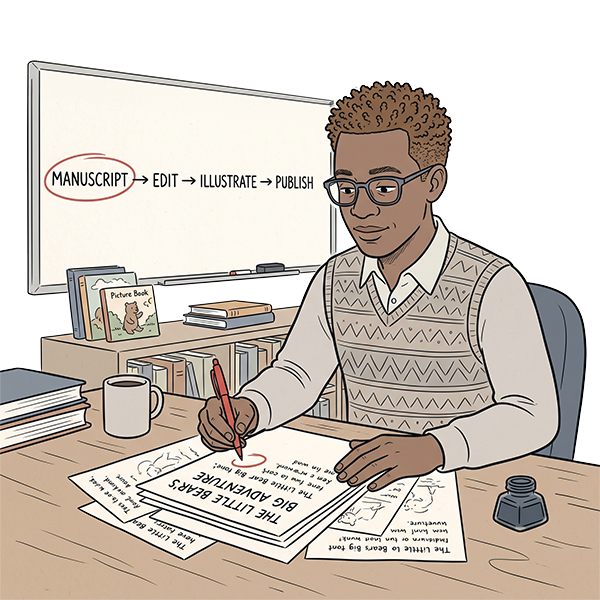
For serious authors, the real problem is usually one of these:
That is not a publishing-path problem.
That is a readiness problem.
And until that is solved, traditional publishing, self-publishing, and hybrid publishing are all secondary decisions.
Once the diagnosis is clear, the project stops feeling vague and starts feeling buildable.
You know what shelf the book belongs on. You know what to revise first. You know whether the next step is developmental editing, illustration planning, querying, self-publishing, or a guided publishing path.
That clarity protects the budget, but it also changes the emotional experience of the project. Instead of guessing, you can move with confidence. Instead of spending reactively, you can build in sequence. Instead of wondering whether the book is close, you know what it needs to become ready.
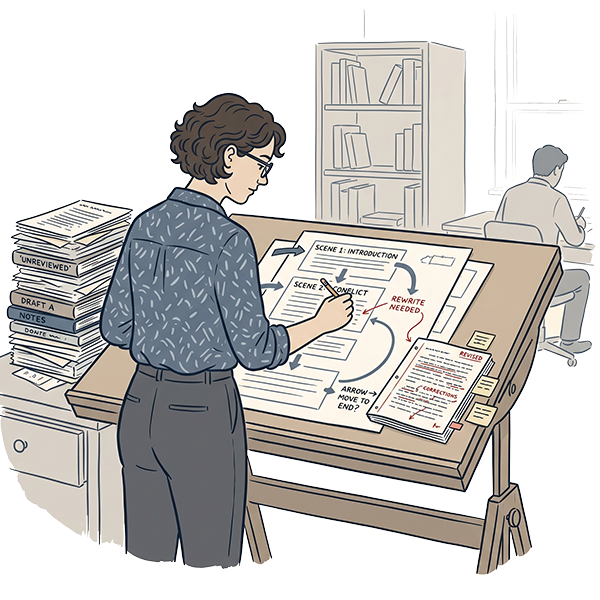
Children’s books often expose sequencing problems through art direction, visual storytelling, and pacing — not just through the writing itself.
For a public example of how illustration fit, sequencing, and publishing decisions can materially improve a children’s book, see The Tale of the Tooth Mouse case study.
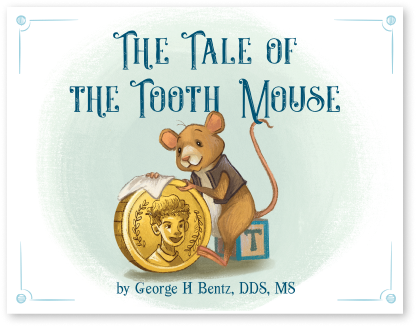

We start with a Professional Manuscript Assessment so the book is evaluated before bigger investments are made.

If the manuscript is ready for the next stage, we determine the right editorial, illustration, design, and publishing path for this specific project.
Once the manuscript is stable, production decisions can move forward in the right order.

Marketing works best when it is built on a book that is already clear, positioned, and ready to perform.

Through the process, authors work directly with a dedicated publishing professional who helps guide the book forward step by step. That keeps the process clear, personal, and grounded in the actual needs of the manuscript instead of a generic package.
This is why Izzard is not package-first.
We do not believe in selling later-stage services before the manuscript has earned them.
You can publish a children’s book in several ways.
This can be the right path if the manuscript is category-accurate, highly competitive, and ready for the expectations of agents and acquisitions teams.
This can be the right path if the book is ready and you want more control over timing, rights, team selection, and publishing decisions.
This can be the right path if you want experienced publishing infrastructure without trying to assemble every piece alone.
But none of these routes fixes a manuscript that is still unclear, miscategorized, overexplained, underdeveloped, or not yet illustration-ready.
That is why the first step is still the same.

If the manuscript is ready for the next stage, the path often moves into the kind of professional support that fits the book — not a generic package.
That may include children’s book editing, a more strategic illustration plan, and later, professional cover design and production.
The key is sequence.
You do not need every service first.
You need the right next service, in the right order, for the actual state of the manuscript.
You can pursue traditional publishing, self-publishing, or a hybrid-style path. The smarter first step, though, is to determine whether the manuscript is actually ready for its age group, format, and reader expectations before choosing a route.
Usually, it is not illustration, printing, or marketing. It is a professional Manuscript Assessment that clarifies readiness, age-band fit, editorial needs, and what should happen next.
Not always, and often not yet. In many children’s projects, illustration should begin only after the manuscript is stable enough to support the investment. Starting art too early can lock in expensive mistakes.
Yes. Short does not mean easy. In fact, tight word counts often make editorial precision even more important because every sentence has to do more work.
The answer depends on reading level, emotional complexity, sentence control, page rhythm, protagonist age, and how much of the story should be carried visually. If you are unsure, that is exactly the kind of problem a Manuscript Assessment is meant to solve.
Yes — but only if the manuscript, illustration strategy, packaging, and market position are strong enough. Self-publishing gives you control; it does not remove the need for professional standards.
A clear age band, strong page-turn logic, real visual storytelling space, read-aloud rhythm, and a manuscript disciplined enough to carry a full picture-book experience without overexplaining what the illustrations should do.
That is still useful news. A strong assessment gives you a roadmap, not a rejection. You leave knowing what is working, what is not, and what to do before making bigger publishing investments.
A children’s book can be charming and still not be ready. It can be meaningful and still miss the shelf. It can even be beautifully illustrated and still struggle because the diagnosis happened too late.
Do not spend as if the book is finished before you know whether the manuscript is ready.

Unlock your manuscript's potential with Izzard Ink's manuscript assessment. We'll identify specific areas for enhancement and offer targeted solutions. Connect with us, and together, we'll elevate your manuscript.
Unlock your manuscript's potential with Izzard Ink's manuscript assessment. We'll identify specific areas for enhancement and offer targeted solutions. Connect with us, and together, we'll elevate your manuscript.